
American Psychological Association Division 50


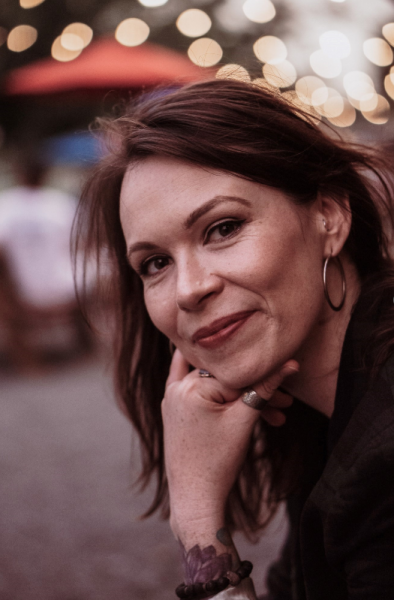
Where do you work and in what capacity?
I'm an Assistant Professor in the Department of Psychiatry and Behavioral Sciences at the University of Washington (UW), where I serve as a core faculty member at the Harm Reduction Research and Treatment (HaRRT) Center. I am currently a principal investigator on an NIH funded study focused on implementing telehealth interventions into permanent supportive housing facilities. My work is focused on the intersection of research and community engagement where I get to co-develop and test digital health interventions for and alongside people with lived experience of chronic homelessness and substance use disorders. I also get to co-lead an equity focused research initiative called the Research with Expert Advisors on Drug Use (READU) at UW with my dear friend and collaborator Dr. Jenna van Draanen. READU is an interdisciplinary, community-based research team that focuses on drug user health equity and currently has several projects focused on improving emergency medical services (EMS) overdose responses andreducing stigma against people who use drugs. In addition to my research, I also mentor and supervise a team that includes undergraduate research assistants and peer researchers with lived experience, who are central to how we do our work.
What are your current research and clinical interests?
My interests lie at the intersection of understanding motivating factors behind substance use, including pain, cravings, and isolation, alongside creating accessible digital health interventions through a harm reduction framework. I'm especially focused on building, testing, and disseminating digital health interventions grounded in community-based participatory research and user centered design for people who have experienced chronic homelessness. Currently, I am the Principal Investigator on a K01 Career Development grant entitled the Electronic Harm Reduction Treatment for Alcohol (eHaRT-A), which is a community-codeveloped therapist guided digital adaptation of the in-person Harm Reduction Treatment for Alcohol (HaRT-A), an empirically supported intervention developed and tested by my mentors, Drs. Susan Collins and Seema Clifasefi. Delivered via Telehealth Stations within permanent supportive housing common areas, eHaRT-A allows residents to have private therapy sessions guided by therapists through screen sharing and video conferencing. Ultimately, eHaRT-A aims to reduce alcohol-related harm and improve quality of life by expanding access to digital health care that residents may not otherwise be able to reach.
How did you become interested in addictive behaviors?
My path into this field was shaped by personal loss. I lost someone close to me to a drug overdose while I was in college, right around the time I was deciding between majoring in anthropology or psychology. That experience pushed me toward psychology in a meaningful way. From there, I pursued my Basics in Addictions Counseling license, which gave me both a clinical foundation and real-world exposure to addictions treatment. I worked in transitional living facilities doing case management, and that direct experience with people navigating substance use disorders and complex judicial systems made it clear that this was the work I wanted to dedicate my career to.
What motivated you to serve as a prior student representative for the Society of Addiction Psychology (Division 50)?
I was encouraged to do it by my colleague and longtime friend, Dr. Megan Kirouac, who I met when I was an undergraduate and she was a graduate student. She has always believed in me and pushed me to step outside my comfort zone by getting more involved, and I am deeply grateful for that. I served as student representative from July 2016 to July 2018, and it turned out to be one of the most rewarding experiences of my early career. I helped facilitate conference programming and student social events, which gave me my first real exposure to the organizational side of the field. I also helped organize the Division 50 Student Research Grant process, putting procedures into place that are still used today. More than anything, the relationships I built during that time with clinicians, researchers, and fellow students left a lasting impressionon both me and my career.
How has your involvement with Division 50 positively impacted your career?
I have been a Society of Addiction Psychology (SoAP) member since beginning graduate school, and my involvement has grown significantly over the years. One of the most meaningful and unexpected outcomes of that early investment was meeting Dr. Seema Clifasefi at a social event. Years later, when my name came up in a professional context for my postdoctoral fellowship, she had a positive memory of me to draw from, and that connection has grown into an important mentorship with her and Dr. Collins that I am so thankful for. It is a great reminder that showing up in professional spaces matters, even when it does not feel consequential in the moment. Beyond that, I co-chaired the 2024 APA SoAP program alongside Dr. Christina Lee, which focused on community engaged addiction psychology and chaired the 2025 APA SoAPprogram with Dr. Silvi Goldstein, which focused on digital innovation in addiction psychology. I still currently serve on the APA Program Committee as well as the SoAP Awards Committee. Being embedded in this community has been genuinely valuable, connecting me with collaborators, mentors, and colleagues who share a commitment to moving the science forward in ways that are equitable and relevant to addictions research and clinical practice.
What advice can you provide for current students who are interested in getting more involved in the field?
Get involved with SoAP as early as you can. I have made such strong personal and professional connections through this amazing Division that I never would have found otherwise. There is something genuinely unique about how it brings senior faculty and early career folks together in a service context, and that kind of cross-career relationship building is hard to replicate anywhere else. It has shaped a significant part of my professional trajectory, and I am deeply grateful for it. I would also say that beyond any specific organization, it is important to surround yourself with people who push you to step outside your comfort zone. That has made all the difference for me, and I am so grateful for my amazing colleagues and mentors who continue to help me learn and grow in this career.

Resources are available for those struggling with addiction and numerous effective treatments exist. Whether you are looking for help for yourself or a loved one, we encourage you to seek out help.