
American Psychological Association Division 50


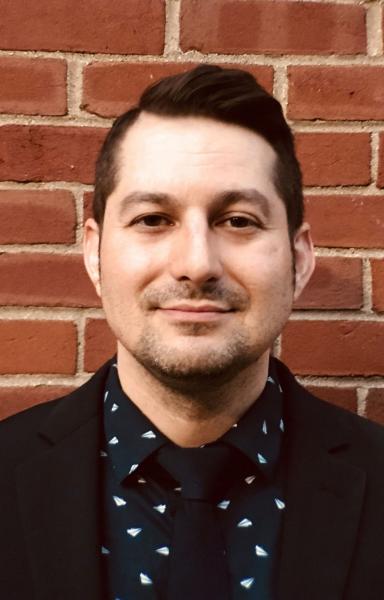
By Dr. Noah Emery, President, Society of Addiction Psychology
As we move into spring, I am struck by the momentum, collaboration, and innovation that continue to define the Society of Addiction Psychology. This is a time of year when our community comes alive in a visible way, through the sharing of ideas, the forging of new collaborations, and the celebration of the work that advances our field. For me, it is also a time of reflection, an opportunity to consider the spaces we create as a community, where we have been, who we are, and who we aspire to be. Accordingly, I want to take this opportunity to highlight some of what SoAP has been building together, with excitement around our upcoming conference.
CPA has long served as a cornerstone meeting for our field, bringing together scientists, clinicians, and trainees to engage in meaningful dialogue about the most pressing issues in addiction psychology. Some of my own most formative professional experiences have taken place in rooms like these, where ideas are stress-tested, perspectives are expanded, and the field moves forward not just through data, but through dialogue. This year’s conference continues that tradition with an exceptional program that reflects both the depth and breadth of our field.
The 2026 CPA theme, “Addiction in Context: Addressing Social Determinants and Structural Drivers Through Interdisciplinary Science,” could not be more timely. Across symposia, keynote addresses, and posters, we see a clear commitment to understanding substance use not as an isolated phenomenon, but as something deeply embedded within social, environmental, and structural contexts. From work examining socioecological determinants of substance use, to innovative interventions in non-traditional settings, to research centering health equity and underserved populations, this year’s program reflects a field that is evolving in both scope and impact.
In many ways, this focus on context and lived reality resonates deeply with my presidential theme this year, “The Science of Lived Experience: Reimagining Research Through Lived and Learned Expertise.” While CPA’s theme and my presidential theme are distinct, from my vantage point, they are connected. Both ask us, in different ways, to move beyond abstraction and toward a science that is grounded in the real-world conditions, relationships, and experiences that shape substance use and recovery.
We are especially honored to welcome keynote speakers whose work has profoundly shaped addiction science. Dr. Tim Trull’s opening keynote will highlight environmental and contextual influences on substance use, drawing on decades of work in ambulatory assessment and real-world behavioral science. Dr. Ricky Bluthenthal’s diversity keynote will challenge us to think critically about structural barriers to care and the role of interdisciplinary science in addressing inequities. Together, these perspectives remind us that advancing addiction science requires not only methodological rigor but also a willingness to engage with complexity, context, and community.
The program showcases an impressive range of methodologies and perspectives. Attendees will find sessions on cutting-edge data approaches, including large-scale epidemiological analyses and high-resolution ecological momentary assessment designs, alongside symposia focused on clinical innovation, implementation science, and community-based participatory research. There is also a strong emphasis on populations that have historically been underrepresented in research, including racial and ethnic minoritized groups, autistic individuals, veterans, and parents in recovery. Importantly, many of these sessions do more than detail lived experience; they center it as a source of expertise.
Equally important are the opportunities for connection and community. CPA continues to prioritize spaces for networking and mentorship, including student networking events, mentor-mentee lunches, and social hours. These moments are not sidenotes to the conference; they are central to who we are as a field, as spaces where ideas are sparked, careers are shaped, and community is sustained. They are also where many of us first find a sense of belonging in this field, something that cannot be captured in an abstract but is essential to sustaining a meaningful scientific community. This is my professional home, and I find myself reinvigorated after attending every year.
This year, we have also taken intentional steps to make CPA more inclusive of individuals in recovery or seeking to change their substance use, including efforts to decenter alcohol from conference programming and social events. By creating spaces that do not presume alcohol use as the default, we hope to foster a community where all attendees feel welcome, supported, and able to fully participate. We will also have recovery meetings available for those who might be interested. Please look for them in the program.
I want to extend a sincere thank you to our Program Co-Chairs, Drs. Jordan Davis and Alex Sokolovsky, whose leadership, vision, and tireless effort made this conference possible. Organizing a meeting of this scale is no small task, and their work, alongside the many volunteers and committee members, reflects a deep commitment to advancing our field and supporting our community.
One of the greatest privileges of serving as President is the opportunity to support trainees and early-career addiction scientists. If you don’t know, SoAP has grant mechanisms funding research projects for our student and early career members. You can find the calls for these grant mechanisms here every year. This year’s SoAP Student and Early Career Grant awardees embody the very best of our field: innovative, thoughtful, and deeply committed to advancing both science and practice.
This year’s awards also represent a full-circle moment for me. In 2015, as the Student Representative, I worked with Drs. Bruce Liese and Jen Buckman to develop the Student Research Grant mechanism. Now, a decade later, it is incredibly meaningful to see these awards continue to grow and support emerging scholars across our field.
Our President’s Selection Student Research Grant, which was selected based on this year’s theme “The Science of Lived Experience: Reimagining Research Through Lived and Learned Expertise,” was awarded to Kara Link for her project, “Moving Toward Recovery: An Explanatory Sequential Mixed Methods Study of Recovery-Oriented Fitness Communities.” Kara’s work exemplifies the spirit of this theme by integrating quantitative and qualitative approaches to understand how recovery-oriented fitness communities support well-being and motivation. Importantly, her study centers the voices of individuals in recovery, ensuring that lived experience shapes both the interpretation and implications of the findings. This is exactly the kind of work that helps close the gap between what we study and what people experience in their recovery.
We also recognized several outstanding student researchers whose work addresses critical gaps in our understanding of substance use:
At the early career level, we are proud to support innovative work from Dr. Melissa Schick exploring the role of happiness and positive psychological processes in substance use, treatment, and recovery among trauma-exposed individuals. This project reflects an important shift in our field, one that moves beyond symptom reduction to consider well-being, meaning, and quality of life as central components of recovery. It also reflects a growing recognition that recovery is not only about reducing harm, but about building lives that feel worth living.
Taken together, these projects reflect a field that is not only methodologically sophisticated but also deeply attuned to lived experience, context, and equity. They are a powerful reminder that the future of addiction psychology will be shaped by those who are willing to integrate scientific rigor with humility, curiosity, and a deep respect for the communities we serve.
If you are unable to join us in Kansas City for CPA, I hope you will consider joining us later this year at the APA Convention in Washington, DC, where SoAP will once again host a dynamic and engaging program.
This year’s APA programming is being led by Drs. Silvi Goldstein and Mariel Bello, who have put together an exciting lineup that continues to reflect our commitment to innovation, inclusion, and scientific excellence. Their leadership ensures that SoAP’s presence at APA will be both impactful and representative of the diverse work happening across our field.
I am particularly excited to highlight a new initiative we will be offering this year, our first internship application skill-building workshop, developed in collaboration with the From Scratch to Match team, led by Dr. Russell Marks and myself. This workshop is designed to address a gap that many trainees experience: the challenge of translating knowledge about the internship process into actionable skills.
Drawing on From Scratch to Match: Russ & Noah’s Guide to the Internship Application Process in Clinical and Counseling Psychology (which can be found freely available here), this session will provide practical, hands-on guidance to help trainees articulate their clinical reasoning, professional identity, and areas for growth. We will focus not only on what to prepare, but also on how to think through and communicate complex clinical, ethical, and cultural issues in a way that reflects both competence and authenticity.
In many ways, this workshop reflects the same core value as this year’s presidential theme: that expertise is not just about what we know, but how we make meaning of our experiences and communicate that understanding to others.
As I reflect on the work happening across SoAP, from CPA to our grant programs to our upcoming APA programming, I am struck by a shared throughline – a commitment to connection. Connection between science and practice. Between researchers and communities. Between trainees and mentors. And ultimately, between our work and the lives of those we aim to serve. This gives me so much hope in what can feel like bleak times.
Thank you for the work you do, for the community you help create, and for the ways you continue to push our field forward. I am deeply grateful to serve alongside you and to be part of a society that is so clearly committed to advancing addiction psychology in ways that are rigorous, compassionate, and impactful.

Resources are available for those struggling with addiction and numerous effective treatments exist. Whether you are looking for help for yourself or a loved one, we encourage you to seek out help.