
American Psychological Association Division 50


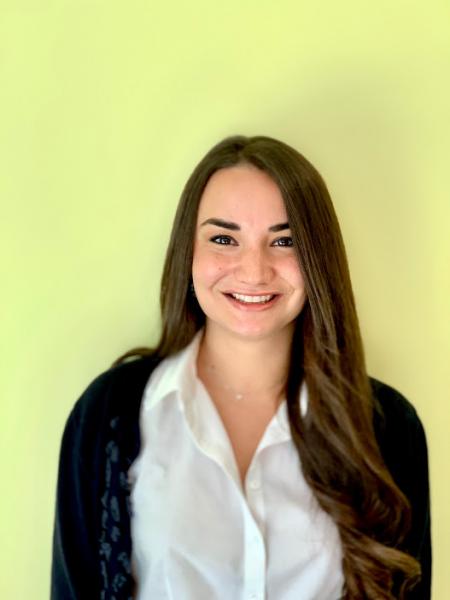
Where do you work and in what capacity?
I am a Health Science Specialist (Investigator) at the Department of Veterans Affairs (VA) War Related Illness and Injury Study Center (WRIISC, pronounced “risk”) in New Jersey. Through its clinical, research, and education arms, the WRIISC serves Veterans with post-deployment and military environmental exposure-related health concerns. I work fully in a research capacity, collecting data, performing data analysis, and writing papers and grants. Because my background and training are in clinical psychology, at times I also serve as an interventionist on clinical trials of behavioral interventions at the WRIISC.
What are your current research and clinical interests?
Currently, my work at the WRIISC focuses on understanding and improving the healthcare experiences of Veterans living with military exposure-related health conditions, particularly those that are historically contested or remain poorly understood. This includes conditions such as chronic multi-symptom illness and Gulf War Illness. Much of my work focuses on the construct of concordance, which is the negotiated shared understanding between patient and provider about the patient’s health condition. My work seeks to understand concordance from Veterans’ perspective and discover ways healthcare providers can foster concordance to improve Veterans' care satisfaction and health outcomes.
How did you become interested in addictive behaviors?
I first became interested in addictive behaviors as an undergraduate student at Boston College through two concurrent mechanisms. I had an influential psychology professor who studied and taught addiction topics, and I participated in a yearlong service-learning course in which I volunteered 10 hours per week at a residential substance use program. Though my current work does not focus on addictive behaviors, I remain deeply interested in the addiction field and see many parallels between addiction psychology and the work I do now. For example, patients with addiction and those with contested or poorly understood health conditions face similar challenges in healthcare, including stigma, invalidation, and dissatisfaction with care.
What motivated you to serve as a prior student representative for the Society of Addiction Psychology (Division 50)?
As a graduate student in a lab for which SoAP served as the primary professional home, applying for the SoAP Student Rep position was an easy decision. I saw how SoAP fostered connection and collaborations for my mentors and fellow graduate students, so I knew I wanted in! I had also attended a few Collaborative Perspectives on Addiction (CPA) meetings and already felt at home among the SoAP family. I am lucky to have earned the confidence of the Executive Board, and was proud to serve the Division and SoAP student members as a Student Rep.
How has your involvement with Division 50 positively impacted your career?
Involvement with SoAP has positively impacted my career in many ways. The Student Rep position gave me early leadership experience and the chance to interface with high-caliber scientists and leaders outside of my immediate circle. I also learned about grantsmanship and grant review through leading the Student Research Grant Program, as well as by serving as a reviewer for a future cycle of the SoAP Early Career Psychologist (ECP) Grant Program. As a postdoc, I was welcomed with open arms to the SoAP ECP Committee, despite no longer having a formal research program in addiction psychology. Most of all, the people I have met through SoAP remain some of my closet colleagues and friends.
What advice can you provide for current students who are interested in getting more involved in the field?
My best advice is, don’t hold back. Graduate school and fellowship are times in your career you will have more resources and opportunities available to you than ever. In my experience so far, SoAP is the most student- and-ECP-friendly professional society I have had the pleasure of working with and calling home. And, the addiction field as a whole is very welcoming and warm toward trainees. Take advantage of all SoAP and the addiction field have to offer!

Resources are available for those struggling with addiction and numerous effective treatments exist. Whether you are looking for help for yourself or a loved one, we encourage you to seek out help.